
Elizabeth Williams Robinson
Hall of Dinosaurs
Schiele Museum of Natural History, Gastonia, North Carolina, 2025 to 2026
Our guests have marveled at the unique combination of the grandeur of the dinosaurs combined with theatrical artistry. It has led to a unique experience that sets the bar for any future exhibit projects in our organization.
The Hall of Dinosaurs is an exhibit about time: how much of it lies behind us, and what we do with our share of it. upLIGHT worked alongside the Schiele Museum’s design, exhibits, and administration teams to shape that idea into a journey told in an overture and three acts. We then designed and produced every piece of light, sound, and media that carries visitors through the space.
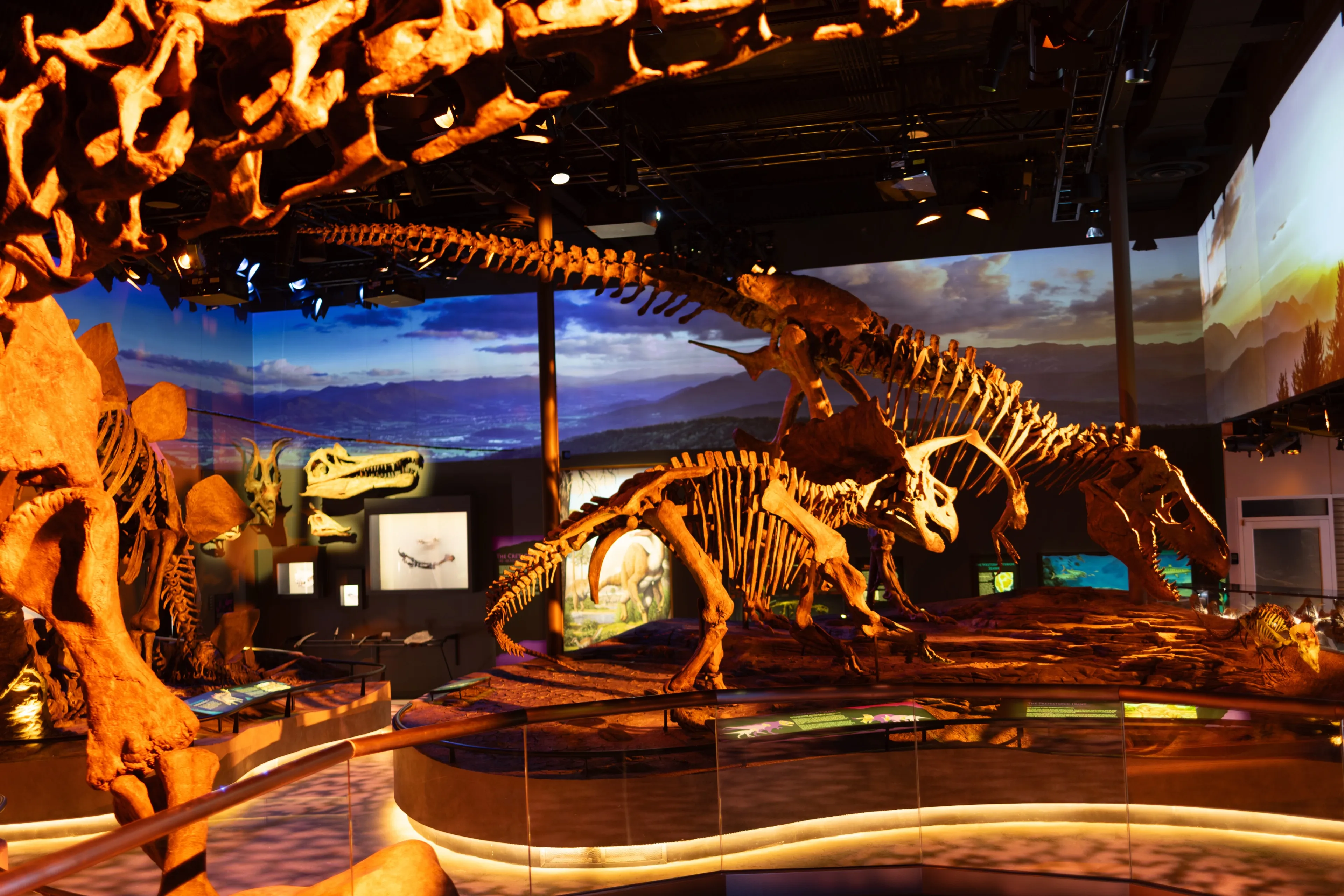
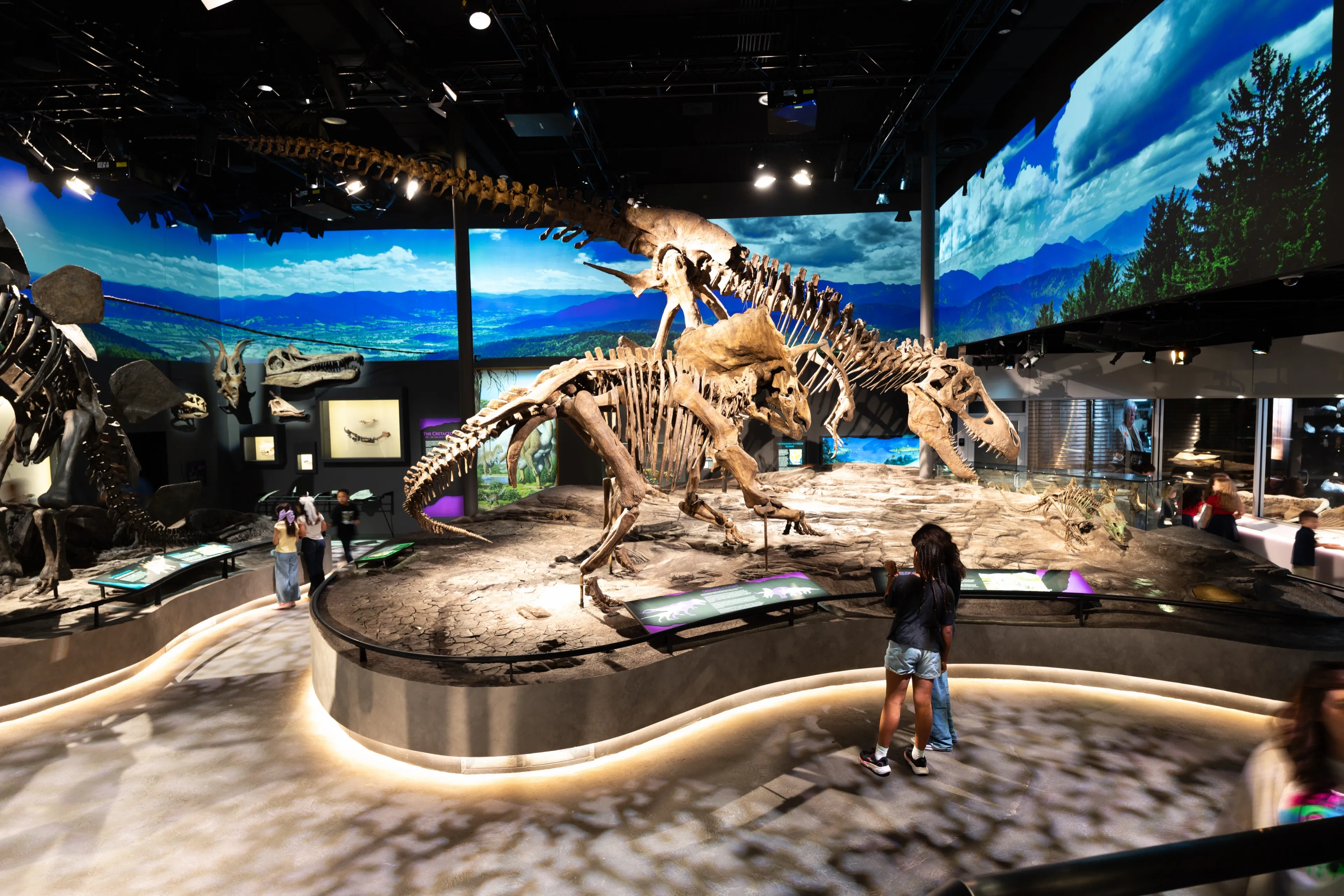
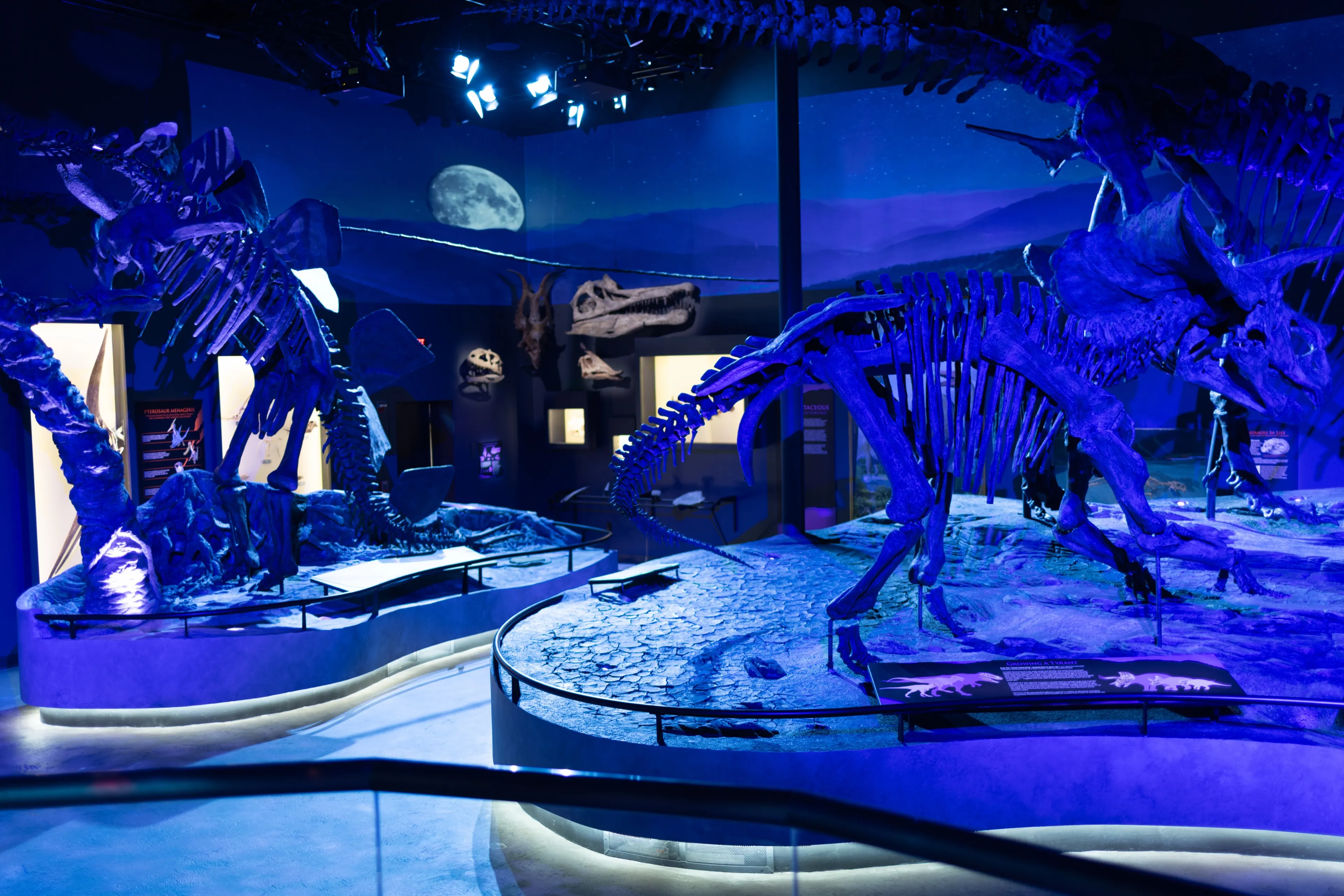
The brief from the museum’s exhibit designer started with the honest observation that these grand animals are huge, they are impressive, and they are completely static. Our answer was to give the hall its own day. Every thirty minutes, the main hall passes through a full cycle of daylight, and the light, the projected sky, and the music all keep the same time. At sunset the light drops low and warm, and the fossils throw long shadows across the hall before it settles gently into night. Light from a new direction reveals new things, so a visitor who lingers sees the same specimen several different ways.
upLIGHT’s contribution
upLIGHT created the complete technology experience for the 4,200 square foot permanent exhibit. We created an integrated plan for lighting, audio, projection, an LED wall, show control, and interactives. Our team also made what plays on those systems, composing the original music, shooting documentary footage in the field, and editing and finishing all of the media content. This level of trusted collaboration is a unique way to build an exhibit, with one team overseeing the vision of the finished hall from the initial concept through opening day. One of the first things we did was take the exhibits department’s 3D model into Unreal Engine and add our own lights and projections to it. That gave every stakeholder confidence in the direction and gave the museum a clear view of what its investment would buy.
They were able to take our ideas at face value, in whatever mode of development they were in, then elevate them to the next level. So, from the very beginning, our combined teams were working at an exponentially higher level.
The journey
Overture: the forest
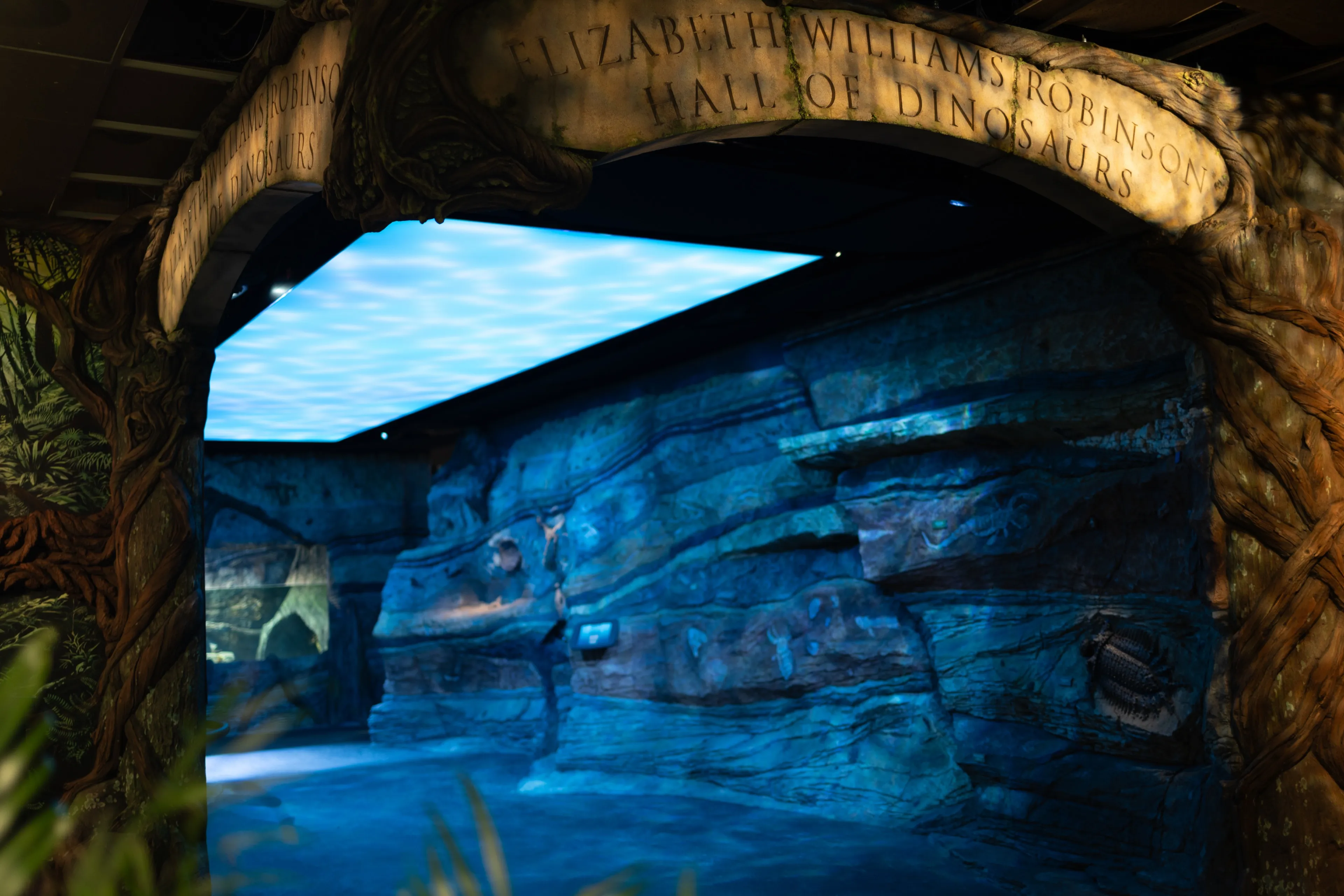
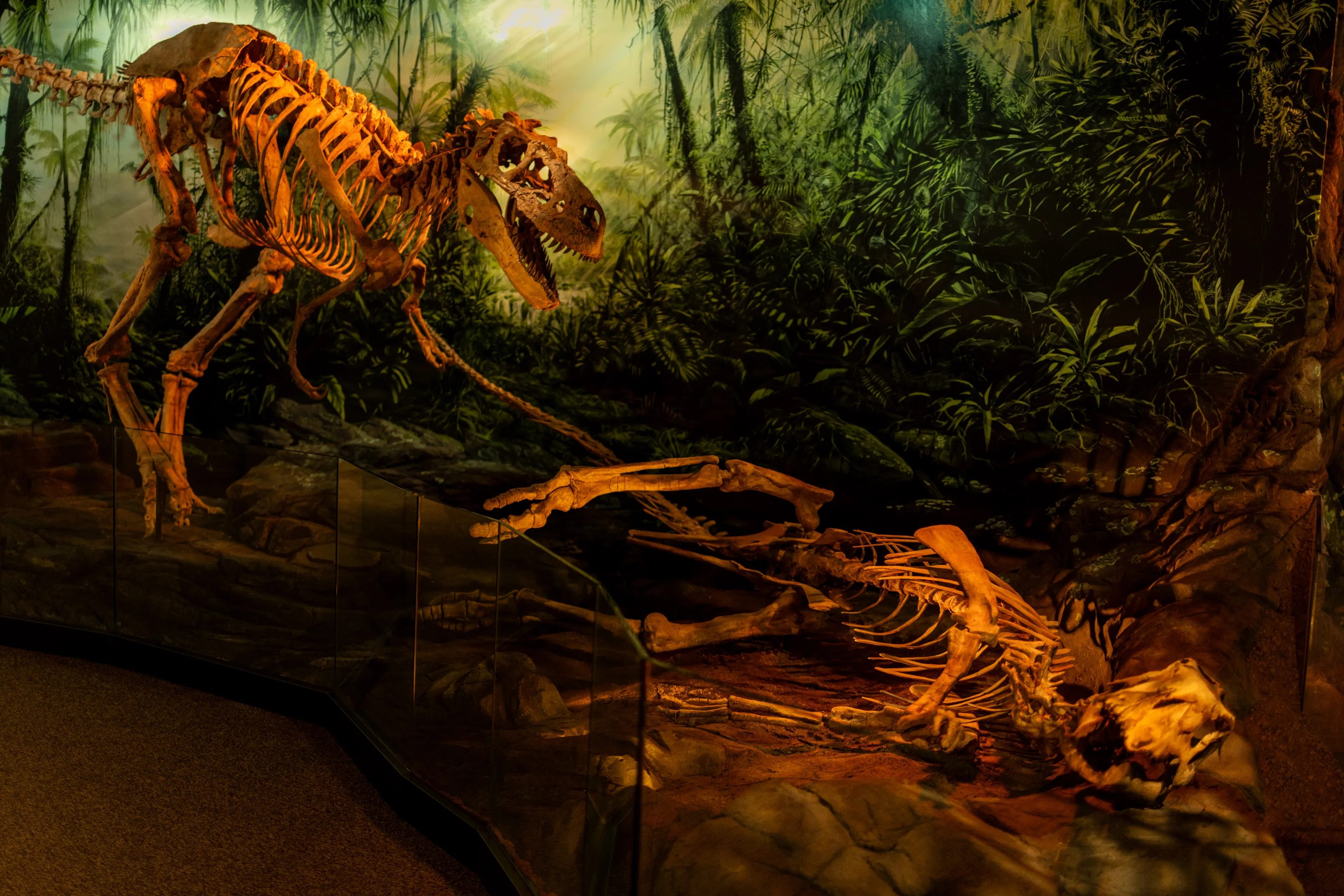
The exhibit opens in a lush forest, with one dinosaur towering over another after an epic battle has ensued. It is a landing spot, a place to arrive before the journey starts, and it is familiar on purpose. A few steps on, the foliage gives way to a riverbed and the light overhead turns to water, marking a new way of transporting visitors to the vastness of the discoveries ahead.
Act one: down through deep time
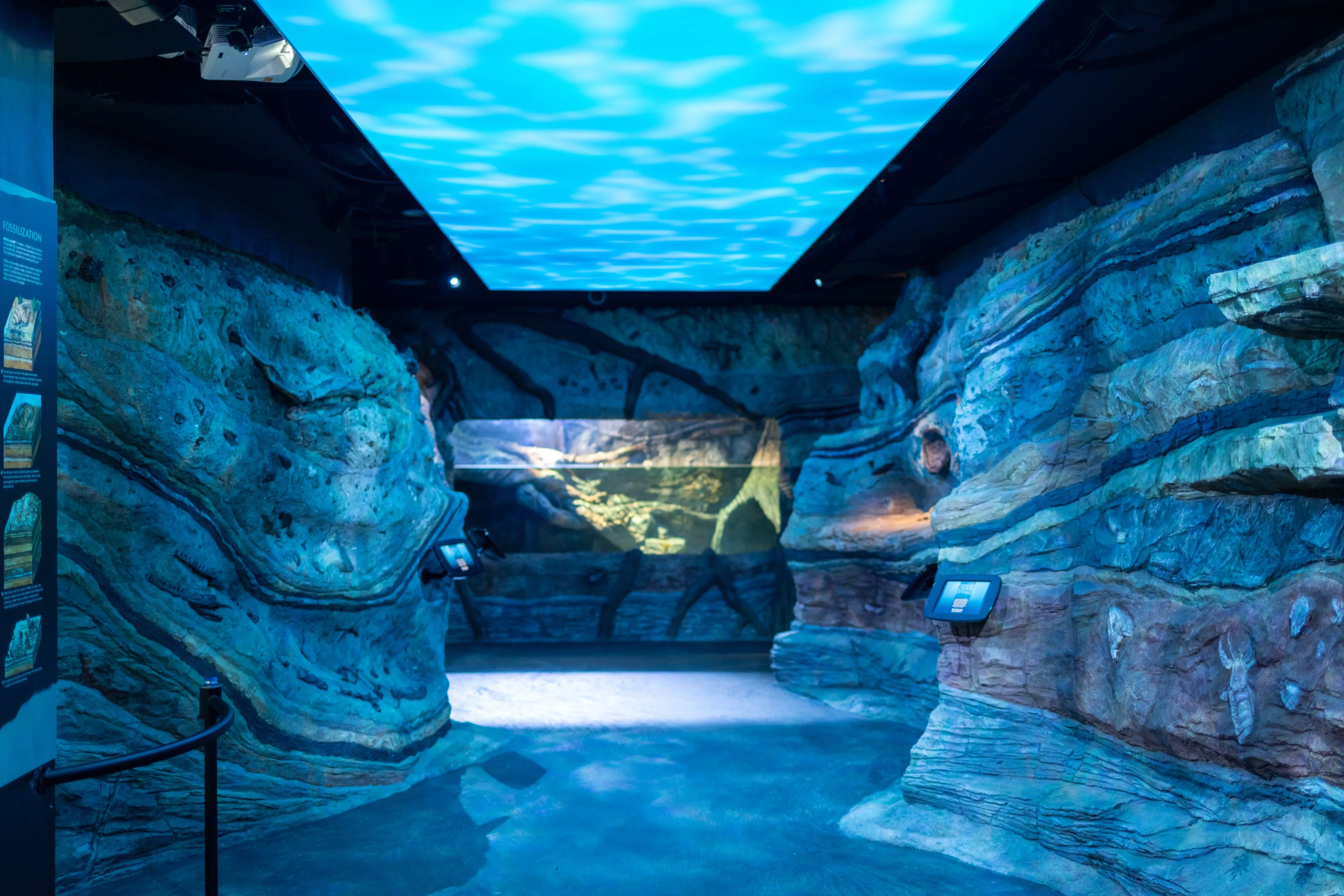
Visitors walk beneath a canopy of moving light that ripples like water overhead, between walls of layered rock that tell the story of deep time. At an interactive dial, they send themselves down through the layers of the earth, farther and farther. The dial grows harder to turn the deeper they go, so the distance between our world and the world of the dinosaurs is something visitors feel in their hands.
Act two: the hall
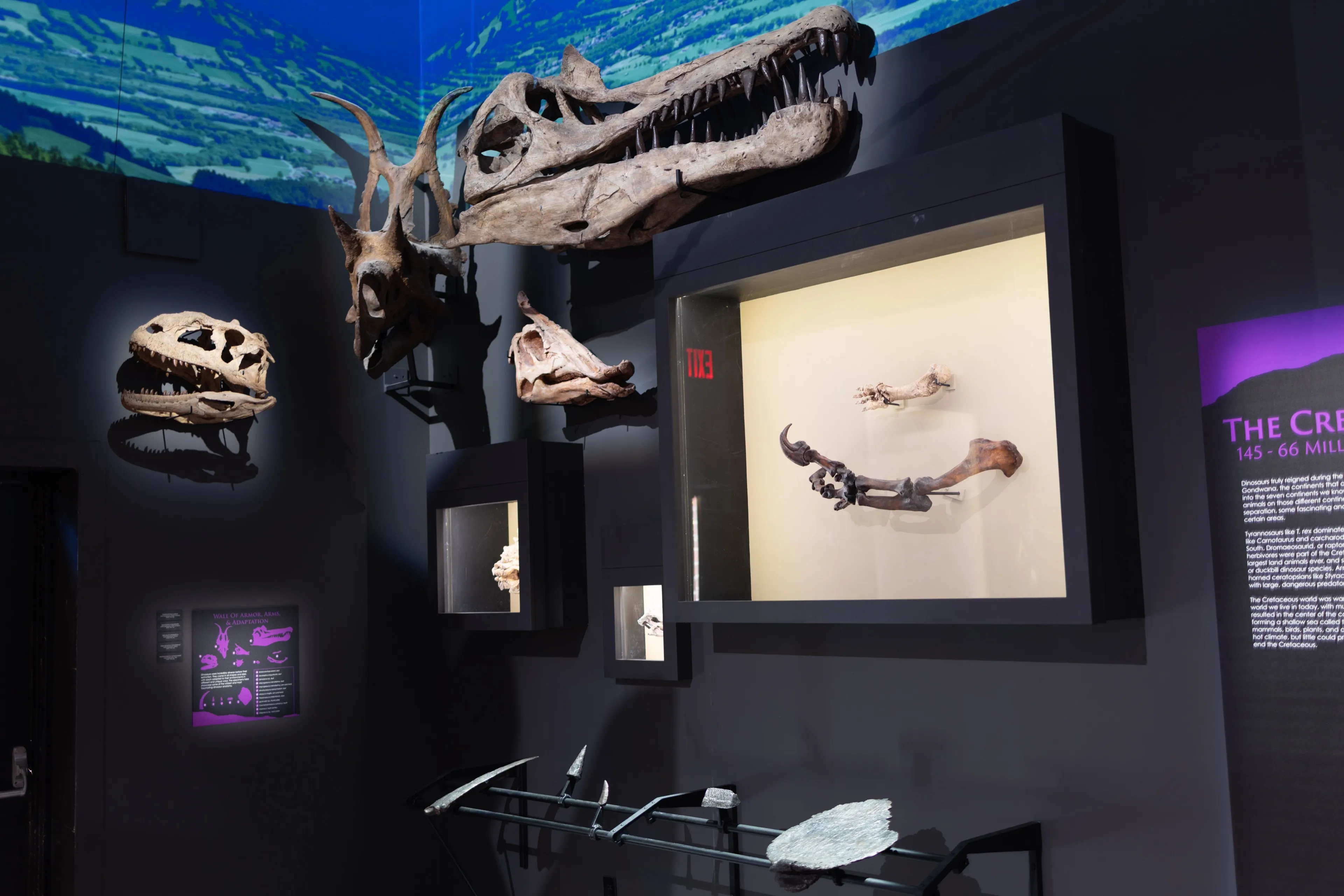
Visitors turn the corner and the main hall opens up, with skeletons rising until they nearly touch the 20-foot ceilings. Around the top of the hall, six edge-blended projectors form a continuous panorama of mountain vistas, carrying the world beyond the walls, its sky moving through the day with the light below. The museum’s commissioned murals are lit with the care of paintings in a gallery, and that light drifts subtly with the day to connect these artworks to the world of the hall. At one case, a family of dinosaurs is caught mid-run, with footfalls sounding around them and beams of light flickering across the animals as if they were running through trees.
Montie’s Lab: be the paleontologist
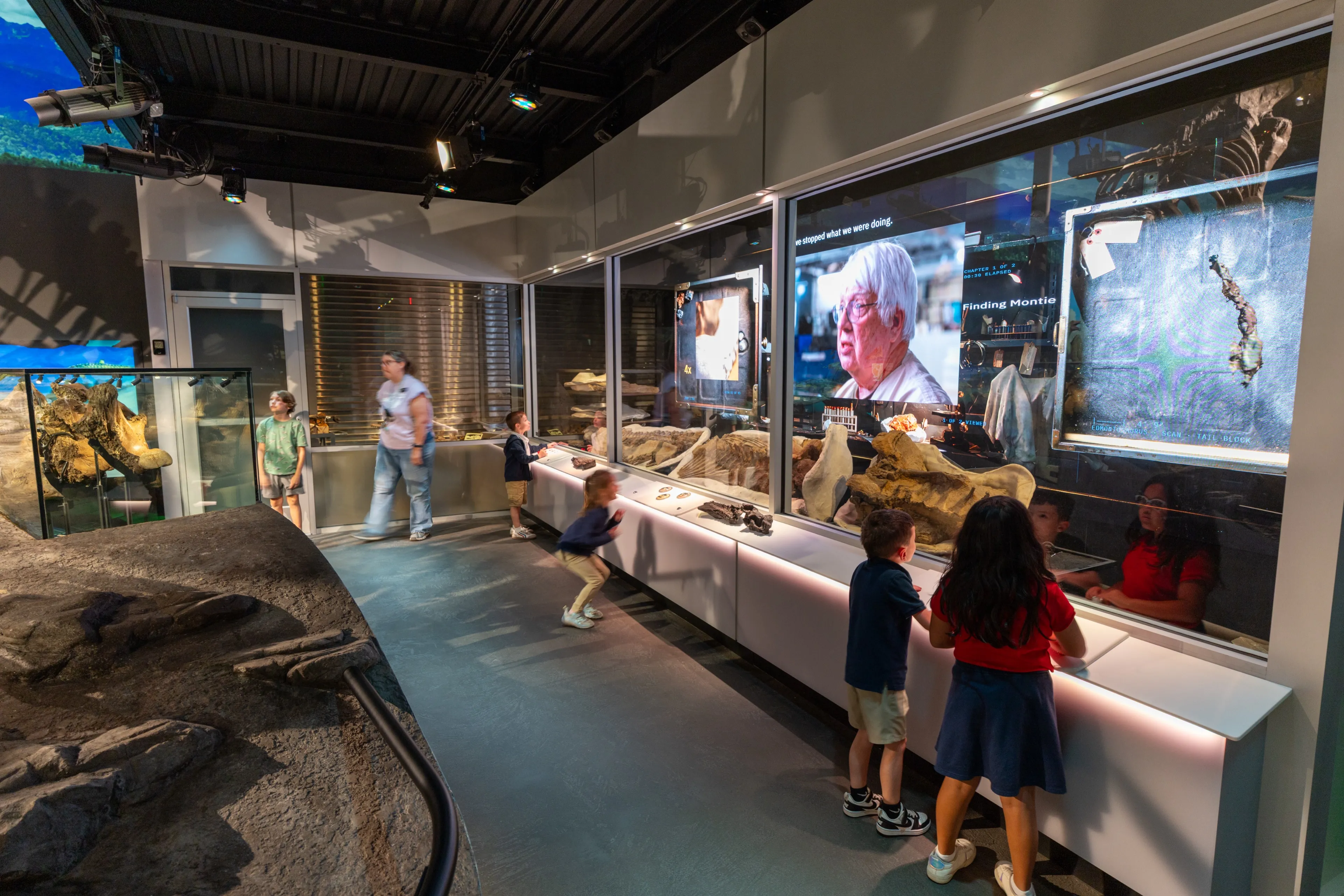
At the far end of the main hall is the fossil specimen that steals the show. Montie is an Edmontosaurus discovered in the Lance Formation of Wyoming in the 1980s, here displayed in a working lab setting with a 20-foot LED wall rising directly behind it. We traveled to Wyoming to film Dr. Kraig Derstler, the paleontologist who discovered the fossil, in the landscape where he found it. With the push of a button, visitors pull sample drawers onto the screen, zoom across high-resolution images, and spin 3D scans of the bones. In one mode, rotoscoped figures of Dr. Derstler and the Schiele’s own Dr. Nickolas Brand walk behind the real fossil, pointing out its ossified tendons, skin impressions, and the healed bite wounds of a Tyrannosaurus rex attack that Montie survived.
Act three: The Continuum
The final act tells the end of the dinosaurs and the rise of the mammals, and it states the exhibit’s message that time is finite and humanity needs to make the most of what it has been given. Visitors leave through a time portal, a tunnel of animated LED light that rushes them forward to the present and releases them into the museum’s Henry Hall of the American Indian, where the story continues.
Sound you walk through
For the score, we brought in two longtime collaborators: composer Jackson Shelton, and sound and music design consultant Don Dorsey, the creator and director of IllumiNations: Reflections of Earth at Epcot. The goal was to give every area of the exhibit its own sonic identity and to lay a trail of breadcrumbs that draws visitors forward. Fifty independently controlled speakers blend music composed for each section with the sounds of the natural world, and the zones are tuned to fade into one another. There is no single mix. Visitors create their own as they move, using their bodies as the mixer.
The result
The Hall of Dinosaurs opened on September 26, 2026. One of the first reviews, from the family guide Kidding Around Greenville, singled out the atmosphere of the hall over the size of its skeletons and described the light and sound changing from morning through nightfall. “You don’t just look at the dinosaurs,” wrote reviewer Amanda Maloney. “You enter their world.”
Project facts
- Client
- Schiele Museum of Natural History, a department of the City of Gastonia and a member of the Smithsonian Affiliations Program
- Location
- Gastonia, North Carolina
- Years
- 2025 to 2026
- Opened
- September 26, 2026
- Size
- 4,200 square feet
- upLIGHT scope
- Concept development
- Previsualization in Unreal Engine
- Lighting design
- Audio system design
- Projection
- LED wall
- Show control
- Interactives
- Original music
- Documentary production
- Editing
- Visual effects
- Finishing
- Filming locations
- Lusk, Wyoming
- Triebold Paleontology, Woodland Park, Colorado
- Appalachian State University, Boone, North Carolina
- Key technology
- Show control running a 30-minute day cycle across light, sound, and projection
- Six-projector edge-blended panorama
- 50 independently controlled speakers on an IP audio network
- LED wall approximately 20 ft x 6.5 ft at 1.5 mm pixel pitch
- Previsualization in Unreal Engine
- Interactive fossil explorer with 3D scans
- Animated LED time tunnel
- Credits
- Schiele Museum design, exhibits, and administration teams
- Dr. Nickolas A. BrandCurator of Collections and Research, Schiele Museum
- Dr. Kraig DerstlerPaleontologist
- Jackson SheltonComposer
- Don DorseySound & Music Design Consultant
- Robert MachadoDirector of Photography
- Mark WittonPaleoart
- Román García MoraPaleoart
- Press
- Schiele Museum unveils biggest dinosaur experience in the CarolinasWCNC Charlotte, Charlotte Today
- Walk Among Dinosaurs at The Schiele Museum’s Incredible New Hall of DinosaursKidding Around Greenville · Amanda Maloney · September 28, 2026